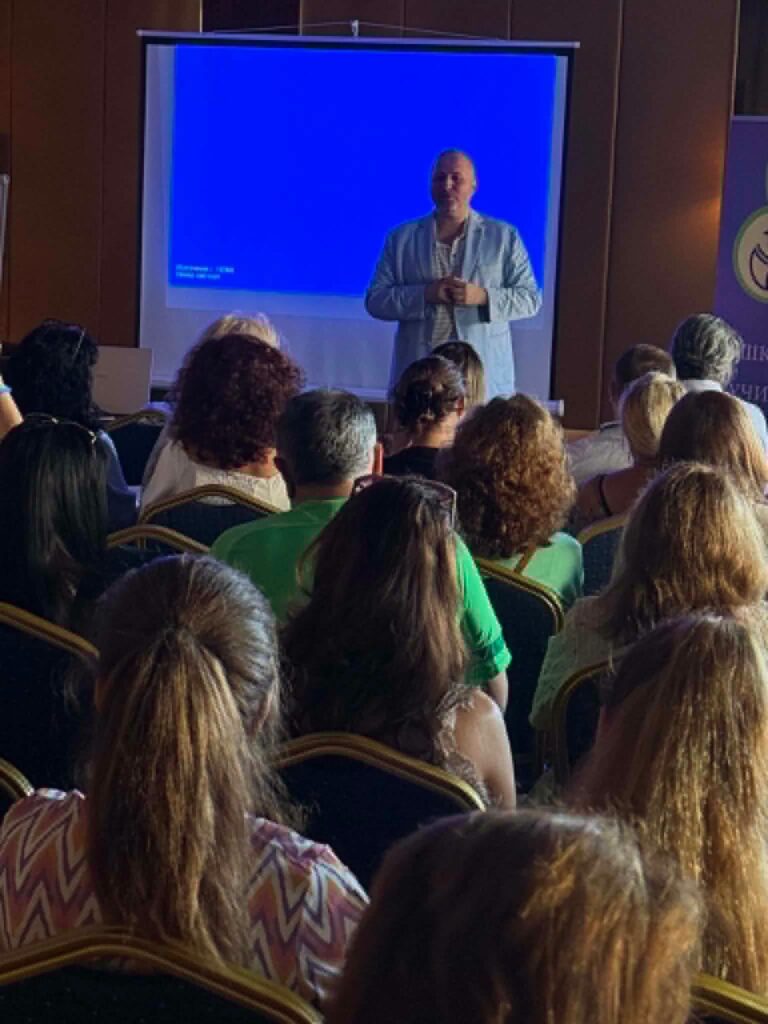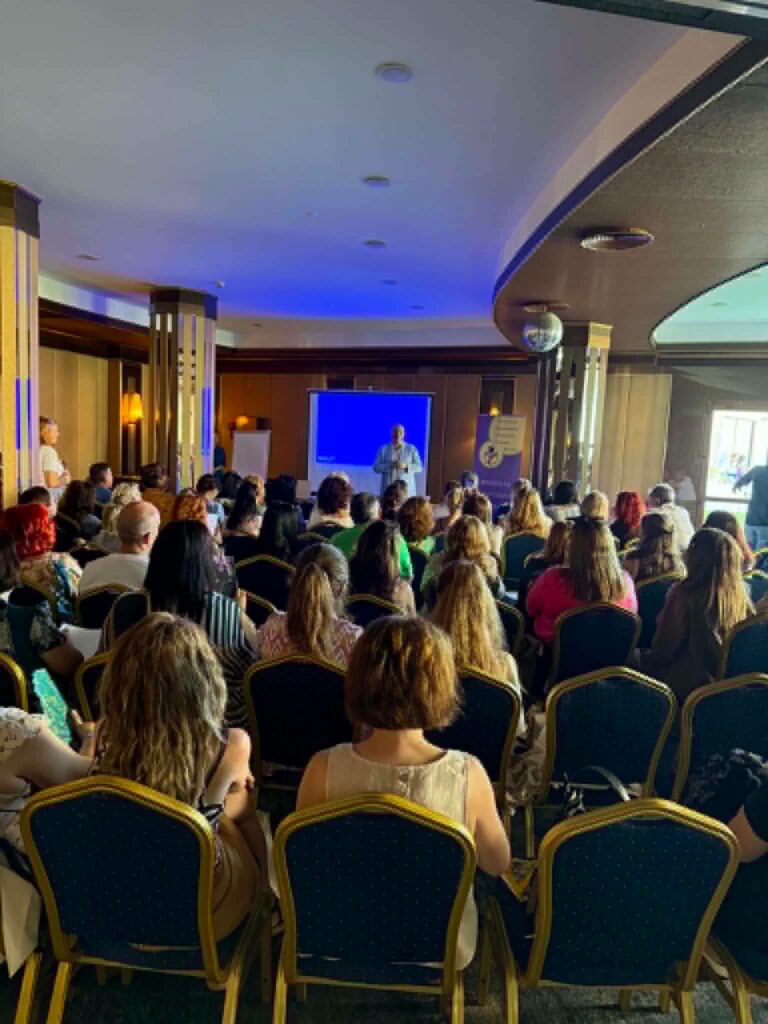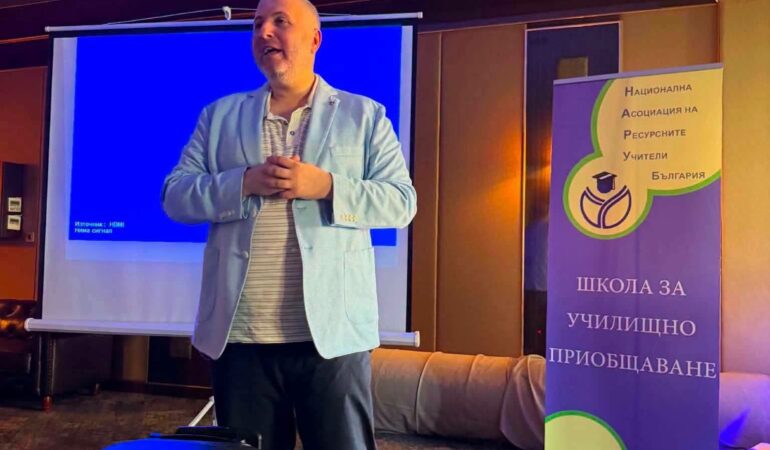
The traditional Summer School on Inclusive Education, organized by the National Institute for Education and Inclusive Policies and the National Association of Resource Teachers, is currently taking place.
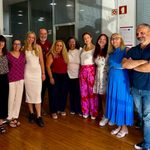
This year’s event is hosted in Sveti Vlas, where more than 80 professionals in the field of inclusive education have gathered to exchange experience, ideas, and good practices.
Special guests at this year’s edition include Assoc. Prof. Kaloyan Damyanov, PhD, Regional Governor of Stara Zagora Region and a long-standing advocate for inclusive education policies, who joined the participants on the opening day of the Summer School, as well as Boyana Aleksov, Chief Expert at the Inclusive Education Directorate of the Ministry of Education and Science. She welcomed the participants and wished them a successful and productive programme.
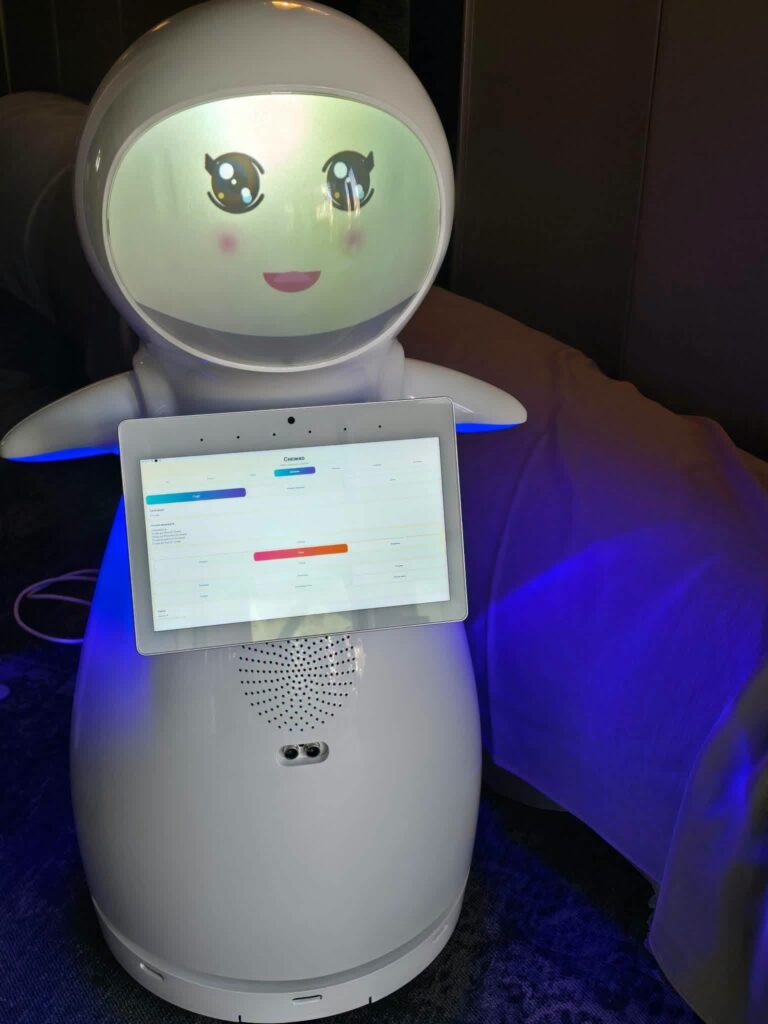
The programme also featured Euroclass-Consult Ltd., a long-standing partner of Bulgarian educational institutions in the fields of teacher training, educational projects, and innovative technologies in education. The company presented its latest educational robots, designed to support the social inclusion of children with special educational needs (SEN).
The robots provide new opportunities for developing communication skills, overcoming barriers to interaction, and fostering each child’s individual strengths and talents.
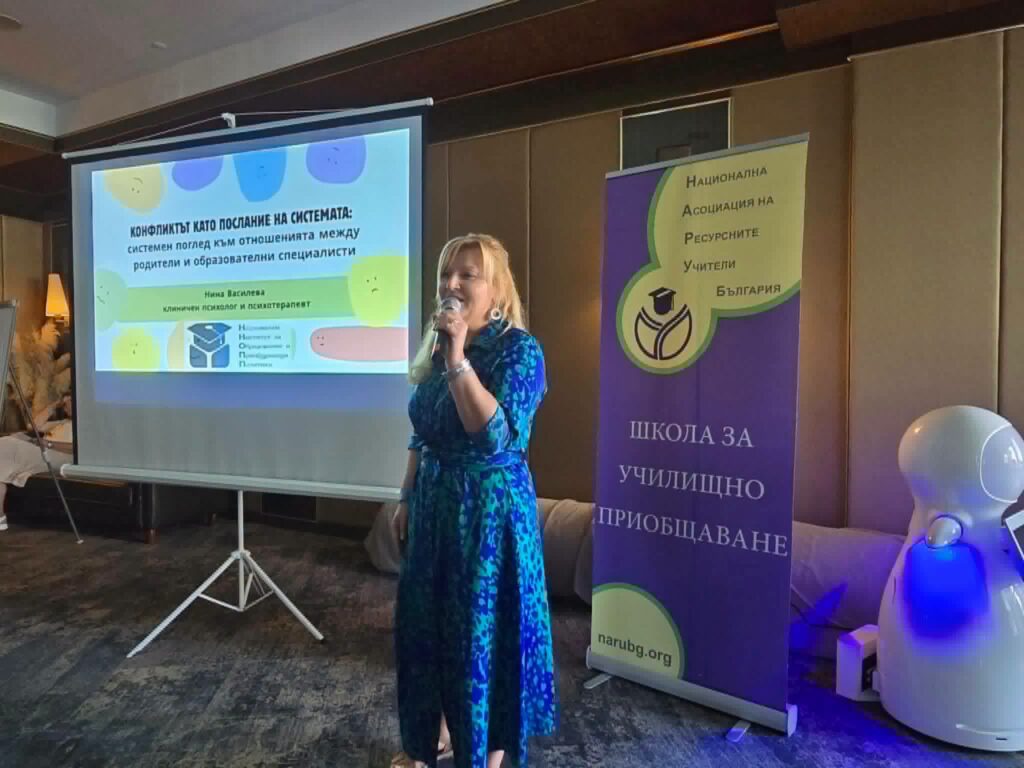
Nina Vasileva, a clinical psychologist, psychotherapist, family and systemic therapist, delivered a lecture entitled “Conflict as a Message of Relationships: A Systemic Perspective on the Interaction Between Parents and Education Professionals.” Drawing on her extensive professional experience, she shared practical approaches for strengthening cooperation between families and educational professionals.
Ralitsa Popova, Chair of the Knowledge Association – Lovech and an experienced facilitator, presented the session “The Stories We Share: Storytelling and Metaphorical Cards in Educational Practice.” During the practical workshop, she demonstrated how metaphorical cards can be used as an effective tool when working with young people, parents, teachers, and representatives of civil society organizations. Participants explored a variety of visual resources and metaphorical cards, examined the structure of inspiring storytelling, and further developed their own storytelling skills. The training combined theoretical knowledge with intensive individual and group-based practical activities.
Representatives of the National Association of Resource Teachers delivered a presentation entitled “Digital Lessons for Children with Special Educational Needs and Key Considerations in Developing Such Materials – Lessons Learned from the ATOLO Project.” During the session, participants were introduced to digital educational resources that have already been developed and are ready for use in supporting the learning of children with special educational needs. They also explored good practices and recommendations for creating accessible, effective, and individualized digital learning materials tailored to children’s specific needs.
The international project “Autism in Motion”, currently under implementation, was also presented. The project is developing innovative virtual reality (VR) headsets featuring specially designed interactive games for children on the autism spectrum. Its primary objective is to support the development of children’s social, communication, and cognitive skills through the use of modern technologies.
The project is built on close collaboration between experts, parents, and children with autism, combining their practical experience with technological innovation to develop effective and sustainable solutions.
Once again, the Summer School on Inclusive Education confirmed its role as a valuable platform for professional exchange, the sharing of good practices, and the presentation of innovative solutions supporting inclusive education.
Through its diverse programme, practical workshops, and demonstrations of modern educational technologies, participants had the opportunity to expand their knowledge and skills while establishing new professional partnerships.
The common goal remains unchanged—to build a more accessible, supportive, and inclusive educational environment where every child has the opportunity to reach their full potential.